On September 29, 2026, Lisa Saltzman delivered a lecture on Walter Benjamin’s “Theses on the Philosophy of History” (1942). Her work centered on discussions of Paul Klee’s Angelus Novus, its accession into Benjamin’s collection, and the ways in which it is presently exhibited.
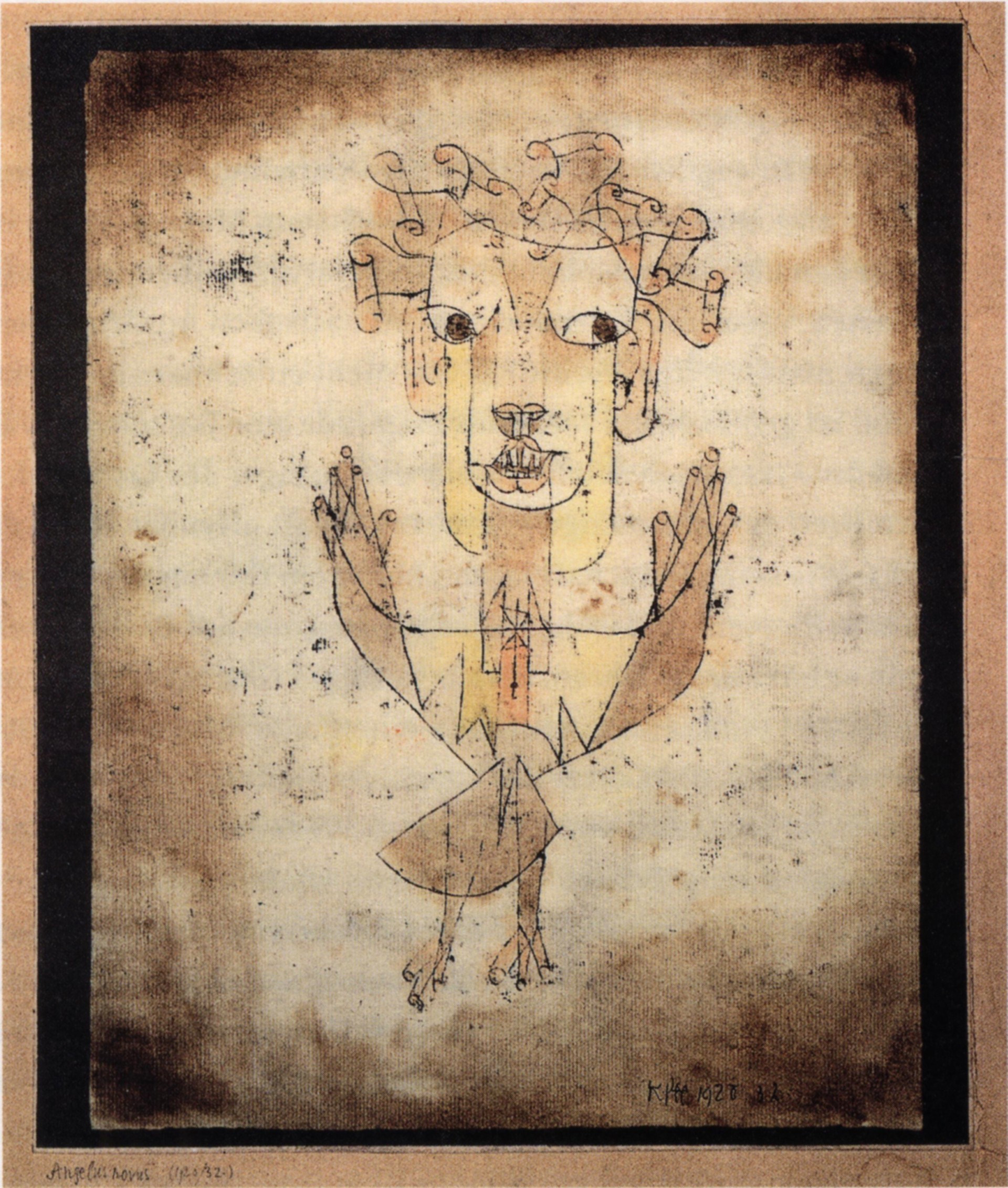
The talk was haunted by Benjamin’s The Work of Art in the Age of Mechanical Reproductability, as multiple allusions were made by the speaker to the “aura” of artwork. It was Saltzman’s viewing of Angelus Novus while it was on a two-week loan to the Centre Pompidou in Paris that launched her investigation into the hidden meaning of a small mark on the figure’s chest, generally not visible in reproduction. Is it a necklace? Crucifix? Key?
Furthermore, an artist’s investigation into a small printer’s mark on the bottom left corner (a section that is normally excised in reproductions of the work) revealed that the oil transfer Angelus Novus was in fact pasted over an 1838 etching by Christian Friedrich Müller of a 1520 painting of Martin Luther by Lucas Cranach. The discussion of the importance of the original and its diminished form in the reproduction stood at the forefront of Saltzman’s presentation. Just as she examined the Klee painting as a layered object, she also examined Benjamin’s “Theses on the Philosophy of History” not simply as a text but as an equally layered artifact. Saltzman explained the constellation of relationships that led to the maintenance of the various copies of Benjamin’s works post-mortem. Thus, the Theses became a kind of community archive. The original draft, scrawled upon newspaper wrappers for lack of paper, was gifted to Hannah Arendt in Marseilles. It was only due to the concerted work of friends and acquaintances that other copies of the work survived in libraries and personal collections.
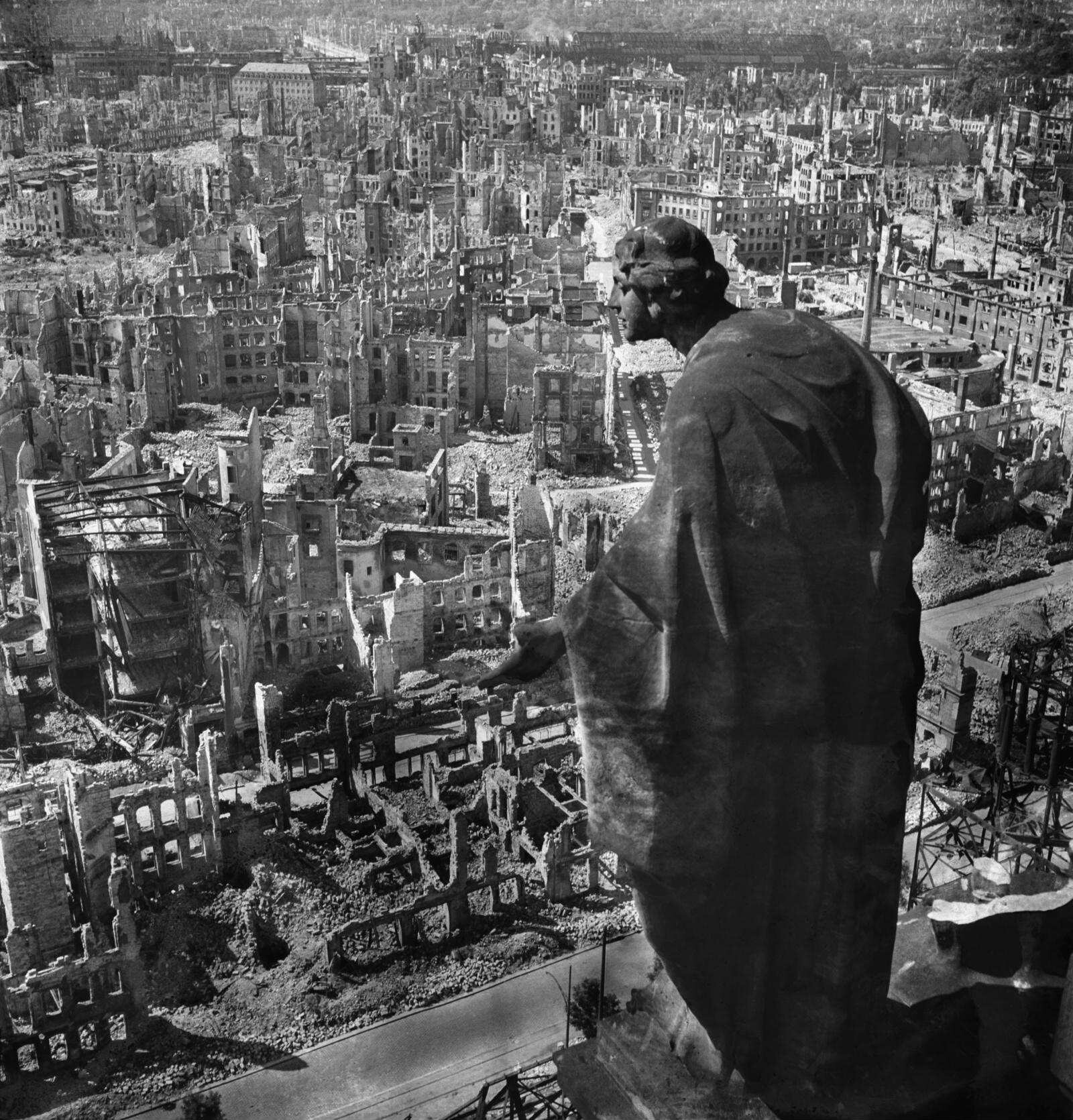
Saltzman further addressed present displays of Angelus Novus, specifically that at the Bode Museum (Berlin) from May-July of 2025, titled “The Angel of History,” arguing that by staging it in the context of the ruins of the second war, the exhibitors were able to invest in it the contextual aura that Benjamin writes about in The Work of Art in the Age of Mechanical Reproduction. By displaying the Angelus Novus alongside a photograph of the rubble of post-war Dresden; clips of Wim Wender’s 1987 film Wings of Desire about divided Berlin; and the manuscript of Benjamin’s Theses, written during the collapse of the Weimar Republic, the exhibition successfully evoked the rubble heap of history. However, Saltzman noted that some of the “aura” of Benjamin was lost due to the failure to include the original text of the Theses, which are housed in the Library of Congress. She argued that the originals, scrawled as they are in tiny text on newspaper wrappers, are invested in a sort of making-do and microscopy which echoes another devotional act that once so impressed Benjamin: the inscription of the entirety of the Shema upon two grains of wheat.
Saltzman, therefore, redefined the nature of the Theses-as-object, moving them from the purely historical into the Jetztzeit that Benjamin refers to in Thesis XIV. She contextualized them and allowed them—as objects—to recuperate the aura of their creation, as doing so acknowledges the perpetual present of the historical object. In doing this, she showed that these artifacts do not only exist as simple material realities; they evoke and are evoked in a web of social understanding.