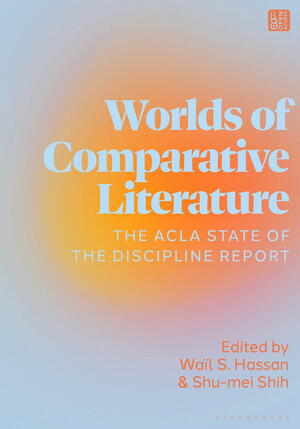
Worlds of Comparative Literature: The ACLA State of the Discipline Report
This open access collection of more than 40 essays from distinguished and up-and-coming scholars provides a definitive point of reference for the field of comparative literature globally in the 2020s.
Worlds of Comparative Literature, the sixth incarnation of the ACLA (American Comparative Literature Association) State of the Discipline Report, showcases the most up-to-date work of leading scholars in the field. With an editorial team made up of distinguished and authoritative voices, an international range of contributors, and a forward-thinking vision of current trends in scholarship, this is an invaluable snap shot of the field against a backdrop of constant change in the Humanities and higher education.
Organized around key concepts and paradigms, new directions and trends, global perspectives, and institutional representation, Worlds of Comparative Literature offers a broad range of coverage on new developments – such as Global South studies, Indigenous studies, and medical humanities – and reflects the current place of comparative literature at universities and colleges. The volume features essays by 10 past presidents of the ACLA and the ADPCL (Association of Departments and Programs of Comparative Literature) and 3 past presidents of the ICLA (International Comparative Literature Association). It also moves away from a US-centered approach, with global perspectives making up more than a third of the volume and contributors based in countries such as Argentina, China, Denmark, India, New Zealand, Qatar, and the UK.
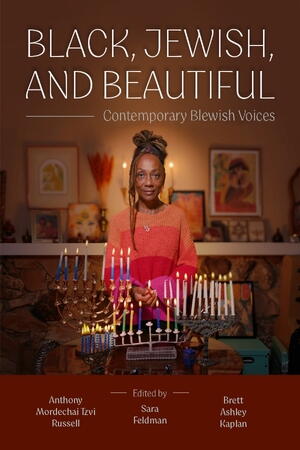
Black, Jewish, and Beautiful: Contemporary Blewish Voices
Black, Jewish, and Beautiful brings together powerful perspectives and showcases the vastly divergent ways people come to inhabit a shared Blewish, or Black Jewish identity. These voices demonstrate that Black Jewishness is just one dimension of their multifaceted lives as they explore how they feel, think, and make sense of who they are.
Anthony Mordechai Tzvi Russell, Sara Feldman, and Brett Ashley Kaplan bring together an array of oral histories, essays, and interviews of Black Jews by birth, others who converted, and those who were raised one way only to discover later that their identity was not what they had thought. The result is a collection of myriad narratives, told through rocky, sometimes-frayed structures. Contributors are open and frank in their discussion of the good, the bad, and the ugly, the heart wrenching, and the beautiful in their experiences.
Black, Jewish, and Beautifulis an essential read for anyone interested in the exploration of belonging and the richness of nuanced identity in contemporary life.
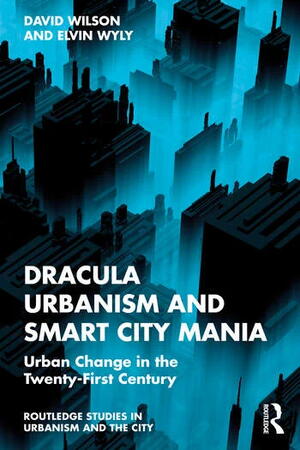
Dracula Urbanism and Smart City Mania: Urban Change in the Twenty-First Century
This innovative book applies the metaphor of Dracula to understand a highly controversial reality that marks so many cities today: how the rage of smart city development and growth proceeds, is organized, and produces benefits for some and afflicts others.
It also explores how social science research into these issues may be informed by the insights of gothic literature as conceptual bonds are forged between the social sciences and the humanities. Focusing on Miami and Mexico City, the book reveals a new quiet warfare being unleashed on the poor and a “Dracula-like” development conduct being rolled out that spreads rapidly across the globe.
This book will appeal to students, researchers, and informed readers interested in urban studies, city planning, urban sociology, critical geography, and literature studies. The book is lucidly written and substantively deep to enhance classroom teaching and provide important details for research on urban redevelopment, city restructuring, and societal change. On the popular front, non-academic readers will find the book enriching and compelling, as only few books clearly and provocatively link the shadows of gothic horror with contemporary realities in cities.
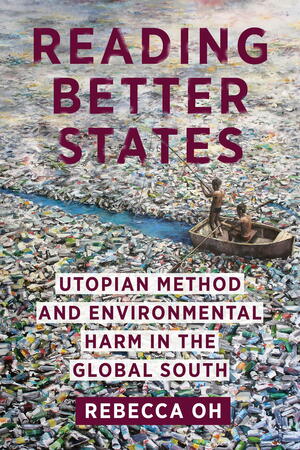
Reading Better States: Utopian Method and Environmental Harm in the Global South
Reading Better States traces the persistence of desires for the postcolonial state in an era of environmental harms and climate catastrophe. As pollution, toxicity, drought, and flood increasingly threaten peoples and environments across the global South, postcolonial writers and ordinary citizens alike have not ceded their futures to the damaged presents they inhabit. Rather, Reading Better States shows how they turn to the state as a resource, imagining postcolonial states as powerful actors and calling upon them to intervene in processes like global capitalism and environmental racism, or to provide environmental protections and basic material necessities. These utopic possibilities are concrete rather than grand, limited and situated rather than totalizing. But they are no less utopic for being quotidian.
Reading Better States challenges the anti-statism prevalent in postcolonial studies and the environmental humanities, where states are predominantly defined through violence. Seeing postcolonial states beyond their bad surfaces requires a utopian method of reading, a way of seeing the state that reads its negativity against the grain for alternative possibilities. In Reading Better States the state is Janus-faced. It is a bad actor, but it is also a site of collective hopes and concrete utopian visions. Using a wide-ranging archive of novels, films, court decisions, legislation, poetry, and testimony, Reading Better States reveals the importance of environmental concrete utopias in the present and reconsiders the postcolonial state for its interventionist possibilities as well as its violence. It does this through a utopian method that, like concrete utopias themselves, attends to negativity while stretching beyond it, seeking out visions of surplus which exceed, even if they cannot escape, the damage and disappointment of the present earth.
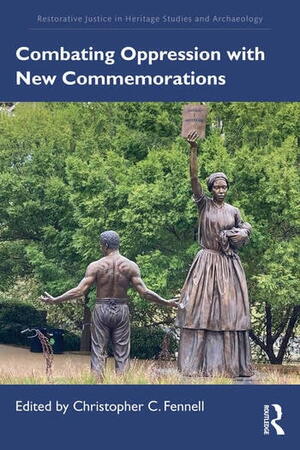
Combating Oppression with New Commemorations
Combating Oppression with New Commemorations examines the ways in which marginalized groups can confront oppressive regimes through commemorations and advocacy of their own heritage.
Presenting case studies from across the globe, the volume provides invaluable insights into the diverse strategies and various disciplinary approaches being used to counter oppression through commemorations of the heritage of marginalized groups. Reminding the reader that such commemorations are often created by individuals who have directly confronted traumas of oppression, contributors emphasize that their survivance, successes, and vitality are tributes to human resilience and creativity. Chapters also demonstrate how such commemorations can advance recognition of the group’s diverse legacies and cultural identity and help enhance social and economic equities for that population across local, regional, and national scales. It is also made clear that they can provide resources for reconciliation negotiations with other social collectives who seek to oppress the marginalized group. These dynamics can facilitate truth-telling, accountability, recovery of unrecorded histories, revitalization, increments of healing, and efforts to avoid future repetitions of past and present social traumas.
Combating Oppression with New Commemorations will be essential reading for academics, and students working in heritage studies, archaeology, anthropology, material culture studies, landscape analysis, and museum studies. It will also be of great interest to practitioners and activists around the world.
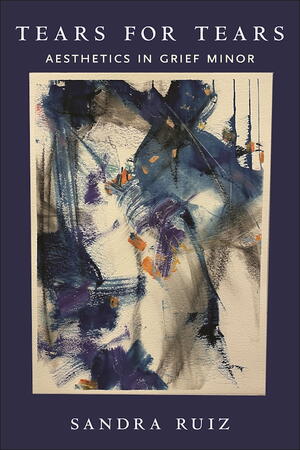
Tears for Tears: Aesthetics in Grief Minor
Tears for Tears documents moments of tension, negotiation, transformation, and incommensurability between singular loss and mass death through the work of contemporary minoritarian artists. These artists interrogate the cultural, social, and political enmeshment of death by questioning the interior and exterior conditions of loss. Charting communal, singular, ongoing, and impending loss due to state-sanctioned violence, colonial racial capitalism, natural disaster, and social and personal circumstances, Sandra Ruiz underscores the affective entanglements across death that reshape the topography of grief into portals of possibility.
Drawing from original interviews, familial artifacts, images, and personal archival notes of artists—much of which have never been written about before—the project centers the minoritarian artist as living with and against death in everyday life and art practice. In doing so, the manuscript stages an archival and ideological intervention into the life of grief for minoritarian subjects and artists.
Moving across performance and video art, sculpture, dance, music, theatre, and poetry, Ruiz highlights the relationship between everyday life and staged events as a critical lens to rethink structures of colonial and imperial spatial temporalities of grief. Offering invaluable insights into the production of these works and performances, Ruiz reveals how these artists move across social, corporeal, and psychic constructions of sorrow in their art practices—often working from parental loss into the domain of communal death—and see grieving, however painful, as an act of empowerment, transformation, growth, and communal building.
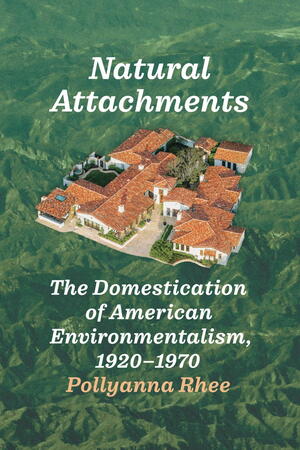
Natural Attachments The Domestication of American Environmentalism, 1920–1970
A nuanced analysis takes a California oil spill as its point of departure to show how affluent homeowners pushed for an environmentalism that would protect not only the earth but also property and community norms.
A massive oil spill in the Pacific Ocean near Santa Barbara, California, in 1969 quickly became a landmark in the history of American environmentalism, helping to inspire the creation of both the Environmental Protection Agency and Earth Day. But what role did the history of Santa Barbara itself play in this? As Pollyanna Rhee shows, the city’s past and demographics were essential to the portrayal of the oil spill as momentous. Moreover, well-off and influential Santa Barbarans were positioned to “domesticate” the larger environmental movement by embodying the argument that individual homes and families—not society as a whole—needed protection from environmental abuses. This soon would put environmental rhetoric and power to fundamentally conservative—not radical—ends.
Islamicate Environments: Water, Land, Plants, and Society
Islam burst forth from Arabia in the seventh century and spread with astonishing speed and force into the Middle East, Asia and northern Africa and the Mediterranean. While its success as a dominant culture has often been attributed to military strength, astute political organization, and religious factors, this Element focuses on the environmental conditions from which early Islamic societies sprang. In the belt of arid land that stretches from Iran to the Maghreb (Spain and Morocco)-i.e. the territories of early Islam-the adaptation of natural water systems, landforms and plant varieties was required to make the land habitable and productive.
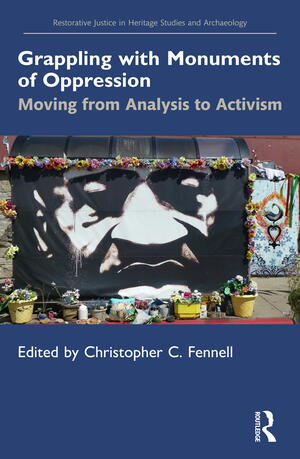
Grappling with Monuments of Oppression: Moving from Analysis to Activism
Grappling with Monuments of Oppression provides a timely analysis of the diverse approaches being used around the world to confront colonial and imperial monuments and to promote social equity.
Presenting 12 interdisciplinary, international case studies, this volume explores the ways in which the materiality of social domination can be combated. With contributions from activists, scholars, artists, and policymakers, the book envisions the theme of restorative justice in heritage and archaeology as encompassing initiatives for the reconciliation of past societal transgressions using processes that are multivocal, dialogic, historically informed, community-based, negotiated, and transformative. Arguing that monuments to historical figures who engaged in oppressive regimes provide rich opportunities for dialogue and negotiation, chapters within the book demonstrate that, by confronting these monuments, citizens can envision new ways to address the context and significance of the figures they memorialize and the many people who were targets of their oppression. Contributors to the book also provide a toolkit of methods and strategies for addressing the continuing structures of social domination.
Grappling with Monuments of Oppression will be essential reading for academics and students working in heritage studies, archaeology, anthropology, material culture studies, landscape analysis, and museum studies. It will also be of great interest to practitioners and activists around the world.
Crisis by Design: Emergency Powers and Colonial Legality in Puerto Rico
Devastating hurricanes, deteriorating infrastructure, massive public debt, and a global pandemic make up the continuous crises that plague Puerto Rico. In the last several years, this disastrous escalation has placed the archipelago more centrally on the radar of residents and politicians in the United States, as the US Congress established an oversight board with emergency powers to ensure Puerto Rico's economic survival—and its ability to repay its debt. These events should not be understood as a random string of compounding misfortune. Rather, as demonstrated by Jose Atiles in Crisis by Design, they result from the social, legal, and political structure of colonialism. Moreover, Atiles shows how administrations, through emergency powers and laws paired with the dynamics of wealth extraction, have served to sustain and exacerbate crises. He explores the role of the local government, corporations, and grassroots mobilizations. More broadly, the Puerto Rican case provides insight into the role of law and emergency powers in other global south, Caribbean, and racialized and colonized countries. In these settings, Atiles contends, colonialism is the ongoing catastrophe.