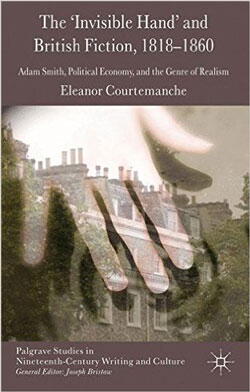
The 'Invisible Hand' and British Fiction, 1818-1860: Adam Smith, Political Economy, and the Genre of Realism
The 'invisible hand', Adam Smith's metaphor for the morality of capitalism, is explored in this text as being far more subtle and intricate than is usually understood, with many British realist fiction writers (Austen, Dickens, Gaskell, Eliot) having absorbed his model of ironic causality in complex societies and turned it to their own purposes.
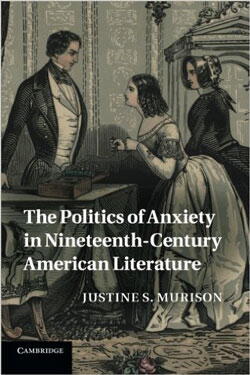
The Politics of Anxiety in Nineteenth-Century American Literature
For much of the nineteenth century, the nervous system was a medical mystery, inspiring scientific studies and exciting great public interest. Because of this widespread fascination, the nerves came to explain the means by which mind and body related to each other. By the 1830s, the nervous system helped Americans express the consequences on the body, and for society, of major historical changes. Literary writers, including Nathaniel Hawthorne and Harriet Beecher Stowe, used the nerves as a metaphor to re-imagine the role of the self amidst political, social and religious tumults, including debates about slavery and the revivals of the Second Great Awakening. Representing the 'romance' of the nervous system and its cultural impact thoughtfully and, at times, critically, the fictional experiments of this century helped construct and explore a neurological vision of the body and mind. Murison explains the impact of neurological medicine on nineteenth-century literature and culture.
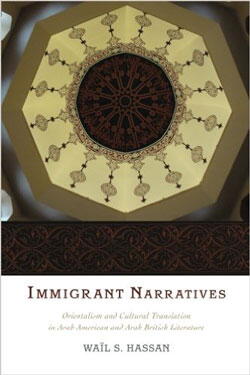
Immigrant Narratives: Orientalism and Cultural Translation in Arab American and Arab British Literature
Arab immigrants began to arrive in the United States in the late-nineteenth century and in Britain after World War Two. Those immigrants have produced a vast literature that remains relatively unknown outside of specialist circles. Like other ethnic literatures, Arab-American and Arab-British writing treats a variety of themes such as the immigrant experience, the lives of minorities, cultural misconceptions, and stereotypes. In addition to that, Arab immigrant writing also reveals unique perspectives on complex issues that continue to shape our world today, such as inter-faith relations, the tangled politics of the Middle East, the role played first by the British empire then by the United States in the region, the representations of Arabs and Arab culture in British and American societies, and the status of Muslim minorities there. Although those issues have acquired an unprecedented urgency in the post-9/11 period, they have preoccupied Arab-American and Arab-British writers since the early days of the twentieth century. While this book is not a comprehensive literary history, it offers a critical reading of that tradition from its inception to the present. Drawing upon postcolonial, translation, and minority discourse theory, Immigrant Narratives investigates how key novelists and autobiographers have described their immigrant experiences, and in so doing acted as mediators and interpreters between cultures, and how they have forged new identities in their adopted countries.
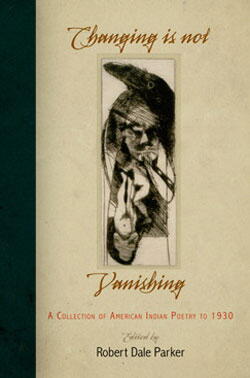
Changing Is Not Vanishing: A Collection of American Indian Poetry to 1930
Until now, the study of American Indian literature has tended to concentrate on contemporary writing. Although the field has grown rapidly, early works—especially poetry—remain mostly unknown and inaccessible. Changing Is Not Vanishing simultaneously reinvents the early history of American Indian literature and the history of American poetry by presenting a vast but forgotten archive of American Indian poems. Through extensive archival research in small-circulation newspapers and magazines, manuscripts, pamphlets, rare books, and scrapbooks, Robert Dale Parker has uncovered the work of more than 140 early Indian poets who wrote before 1930.
Changing Is Not Vanishing includes poems by 82 writers and provides a full bibliography of all the poets Parker has identified—most of them unknown even to specialists in Indian literature. In a wide range of approaches and styles, the poems in this collection address such topics as colonialism and the federal government, land, politics, nature, love, war, Christianity, and racism. With a richly informative introduction and extensive annotation,Changing Is Not Vanishing opens the door to a trove of fascinating, powerful poems that will be required reading for all scholars and readers of American poetry and American Indian literature.

Gilberto Gil's Refazenda
Refazenda connects a remarkable album by one of the 20th and 21st centuries' great musicians to a dazzling, often unexpected, array of people and places spread across the globe from Brazil to England to Chile to Japan. Critics and fans often project (or impose) desires and interpretations onto Gil that don't seem to fit. This book explores why familiar political and musical categories so often fall flat and explains why serendipity may instead be the best way to approach this mercurial album and the unrepeatable artist who created it. Based on years of listening to, studying, and teaching about Gil, and the author's own encounters with the album around the world, this book argues that Refazenda does, in fact, contain radical messages, though they rarely appear in the form, shape, or places that we might expect. The book also includes the first English-language translations of the album's lyrics, never-discussed-before 1970s Japanese liner notes, and a recounting of a forgotten moment when censors detained Gil during the album's debut tour. 33 1/3 Global, a series related to but independent from 33 1/3, takes the format of the original series of short, music-basedbooks and brings the focus to music throughout the world. With initial volumes focusing on Japanese and Brazilian music, the series will also include volumes on the popular music of Australia/Oceania, Europe, Africa, the Middle East, and more.
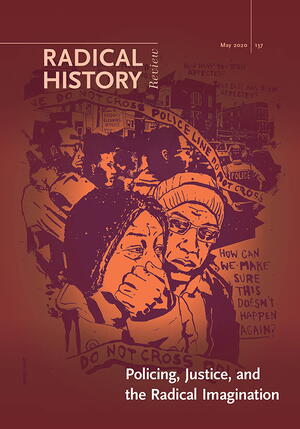
Policing, Justice, and the Radical Imagination
This issue]highlights the historically oriented scholarship and politically engaged writing that examine places and times without police.... Modern approaches to governance generally take police as necessary to maintaining social peace, even though they have proven to fail at fostering public safety and in fact tend to escalate harm and violence. Following the lead of activists working to dismantle police, prisons, and other institutions of state violence, the [special issue] takes seriously the question of how to imagine, and build, a world without police. It looks specifically to historical analysis as an especially useful vantage from which to respond to this provocation.... The issue’s contributors detail times and places when people worked without or against formal institutions of modern police.
From the introduction:
"What if we attempted to collect these case studies systematically, putting scholars of various disciplinary stripes in dialogue with activists to ponder these questions together? This issue draws on a range of available resources and methods -- ethnography; political and legal analysis; social and cultural history; art history; literary criticism; and critical inquiry and visual culture by activists organizing to protect people from police violence and, ultimately, to dismantle police. In the limited space between the two covers of this issue, we could only include a small—but, we hope, compelling—sampling of the ways communities pursued public safety and social peace through a variety of means apart from formal policing institutions. The contributions here remind us of the powerful truth at the heart of the study of history: we need to historicize to denaturalize--to comprehend how features of our world taken for granted as necessary elements of a complex modern society emerged out of a historical process."