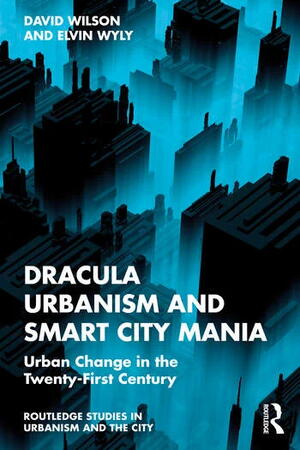
Dracula Urbanism and Smart City Mania: Urban Change in the Twenty-First Century
This innovative book applies the metaphor of Dracula to understand a highly controversial reality that marks so many cities today: how the rage of smart city development and growth proceeds, is organized, and produces benefits for some and afflicts others.
It also explores how social science research into these issues may be informed by the insights of gothic literature as conceptual bonds are forged between the social sciences and the humanities. Focusing on Miami and Mexico City, the book reveals a new quiet warfare being unleashed on the poor and a “Dracula-like” development conduct being rolled out that spreads rapidly across the globe.
This book will appeal to students, researchers, and informed readers interested in urban studies, city planning, urban sociology, critical geography, and literature studies. The book is lucidly written and substantively deep to enhance classroom teaching and provide important details for research on urban redevelopment, city restructuring, and societal change. On the popular front, non-academic readers will find the book enriching and compelling, as only few books clearly and provocatively link the shadows of gothic horror with contemporary realities in cities.
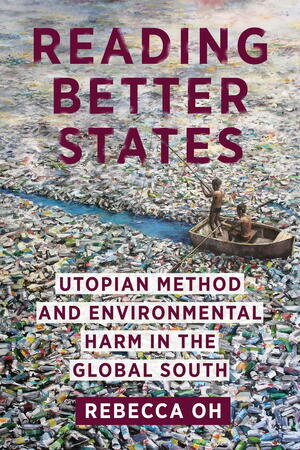
Reading Better States: Utopian Method and Environmental Harm in the Global South
Reading Better States traces the persistence of desires for the postcolonial state in an era of environmental harms and climate catastrophe. As pollution, toxicity, drought, and flood increasingly threaten peoples and environments across the global South, postcolonial writers and ordinary citizens alike have not ceded their futures to the damaged presents they inhabit. Rather, Reading Better States shows how they turn to the state as a resource, imagining postcolonial states as powerful actors and calling upon them to intervene in processes like global capitalism and environmental racism, or to provide environmental protections and basic material necessities. These utopic possibilities are concrete rather than grand, limited and situated rather than totalizing. But they are no less utopic for being quotidian.
Reading Better States challenges the anti-statism prevalent in postcolonial studies and the environmental humanities, where states are predominantly defined through violence. Seeing postcolonial states beyond their bad surfaces requires a utopian method of reading, a way of seeing the state that reads its negativity against the grain for alternative possibilities. In Reading Better States the state is Janus-faced. It is a bad actor, but it is also a site of collective hopes and concrete utopian visions. Using a wide-ranging archive of novels, films, court decisions, legislation, poetry, and testimony, Reading Better States reveals the importance of environmental concrete utopias in the present and reconsiders the postcolonial state for its interventionist possibilities as well as its violence. It does this through a utopian method that, like concrete utopias themselves, attends to negativity while stretching beyond it, seeking out visions of surplus which exceed, even if they cannot escape, the damage and disappointment of the present earth.